
437 Area Code Complete Guide: Coverage Area, Diverse Neighborhoods & Residents
If you’ve received a call or text from a number starting with 437, you might be wondering where exactly it’s coming from and whether it’s even a real, working area code. The short answer: yes, it’s real, it’s Canadian, and it belongs to one of the busiest cities in North America. This guide walks through everything worth knowing about the 437 area code — its geography, its history, who uses it, and how to handle calls from it with confidence.
What Is the 437 Area Code?
The 437 area code is a telephone area code that serves Toronto, Ontario, Canada, and the surrounding communities of the Greater Toronto Area (GTA). It isn’t a standalone region with its own dedicated territory. Instead, it’s what’s known as an overlay code — a second (technically third) layer of numbers added on top of Toronto’s original 416 area code and its first overlay, 647.
In plain terms:
- Country: Canada
- Province: Ontario
- Primary city served: Toronto
- Type: Overlay area code (shares territory with 416, 647, and 942)
- Time zone: Eastern Time (ET) — UTC-5 in winter, UTC-4 during Daylight Saving Time
- Governing body: Canadian Radio-television and Telecommunications Commission (CRTC), under the North American Numbering Plan (NANP)
So if a number begins with +1 437, you’re almost certainly dealing with someone or something connected to Toronto’s phone network, whether that’s a landline, a mobile number, or a VoIP (internet-based) line.
The History Behind Area Code 437
Understanding why 437 exists tells you a lot about Toronto itself. This isn’t a random string of digits — it’s the direct result of explosive population growth and the telecom industry scrambling to keep up.
From 416 to 437: A Timeline
- 1947 — Area code 416 is assigned as one of the original area codes in North America, at the time covering a huge swath of Southern Ontario.
- 1993 — As the region grew, 416 was split, with the surrounding suburbs handed the new 905 area code while 416 stayed with the core city.
- 2001 — Even after the split, mobile phones and pagers pushed 416 toward exhaustion. Rather than split the city again, regulators introduced 647 as Canada’s first overlay code, which also made 10-digit dialling mandatory in Toronto.
- March 25, 2013 — With 416 and 647 numbers running low again, the CRTC approved a third code for the same territory: 437.
- April 26, 2025 — A fourth overlay, area code 942, entered service to keep the numbering pool from running dry as demand kept climbing.
This pattern — overlay after overlay instead of splitting the city into separate regions — is deliberate. It means residents and businesses never have to change their existing phone numbers just because new numbers are being issued. It’s a far less disruptive way to solve a numbering shortage than redrawing geographic boundaries.
Why an Overlay Instead of a Split?
Geographic splits used to be the standard fix when an area code ran out of combinations. But splits force some residents to adopt a brand-new area code overnight, which creates confusion for businesses, printed materials, and personal contacts. Overlays solve the same capacity problem without uprooting anyone’s existing number. That’s why Toronto – and most major North American cities today – now relies on overlays rather than splits.
Geographic Coverage: Where Is 437 Actually Used?
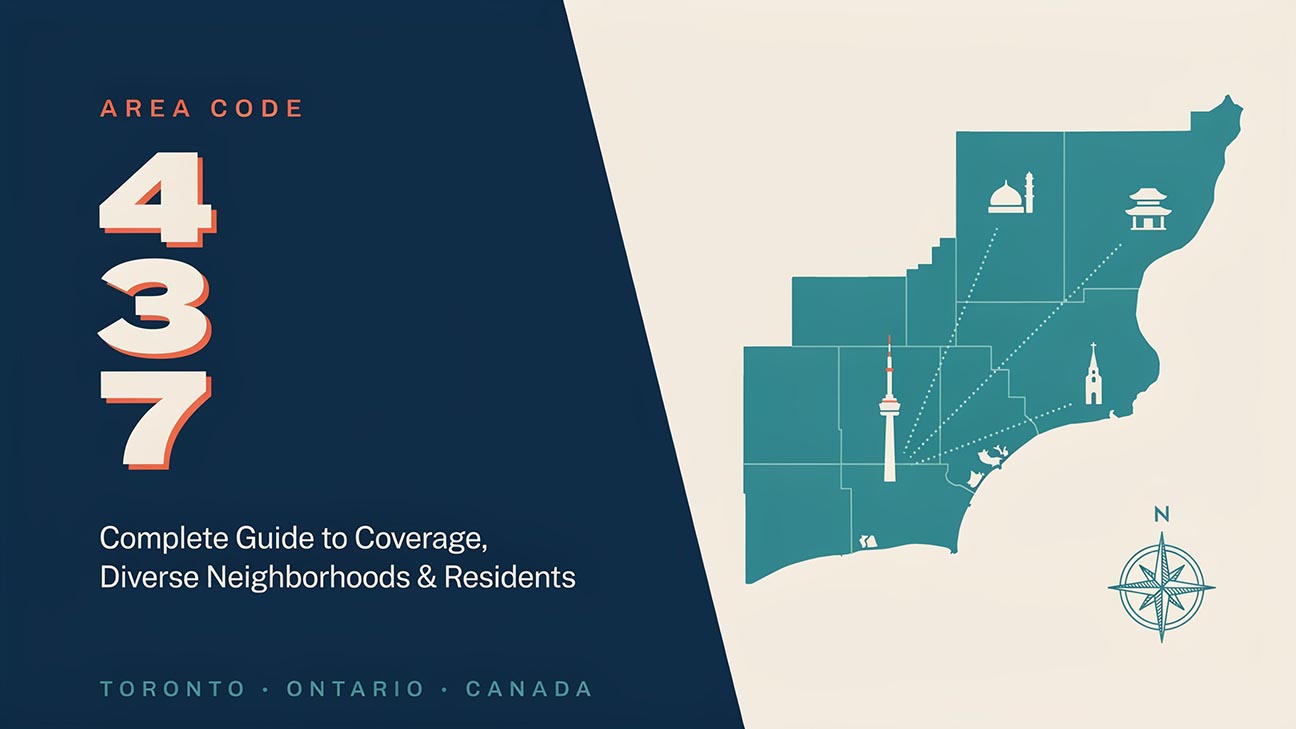
Because 437 is an overlay, its footprint mirrors 416 and 647 almost exactly. The coverage area includes:
- Downtown Toronto and the central business district
- North York
- Scarborough
- Etobicoke
- East York
- York
- Parts of neighboring municipalities such as Mississauga, Vaughan, Markham, and Richmond Hill, where the numbering region blends into the wider GTA
This means a 437 number doesn’t pin someone to a specific neighbourhood the way old-style area codes once did. Two neighbors on the same street could easily have a 416 number and a 437 number, simply because of when each of them signed up for service.
Toronto’s Diversity: The City Behind the Code
Part of what makes the 437 area code interesting isn’t the digits themselves – it’s the city they represent. Toronto is consistently ranked among the most multicultural cities on the planet, and that diversity shapes daily life across the entire 437 coverage zone.
A Cultural Mosaic
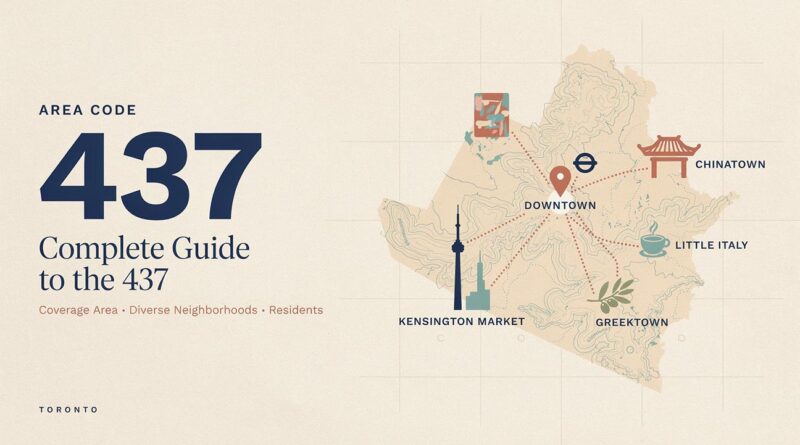
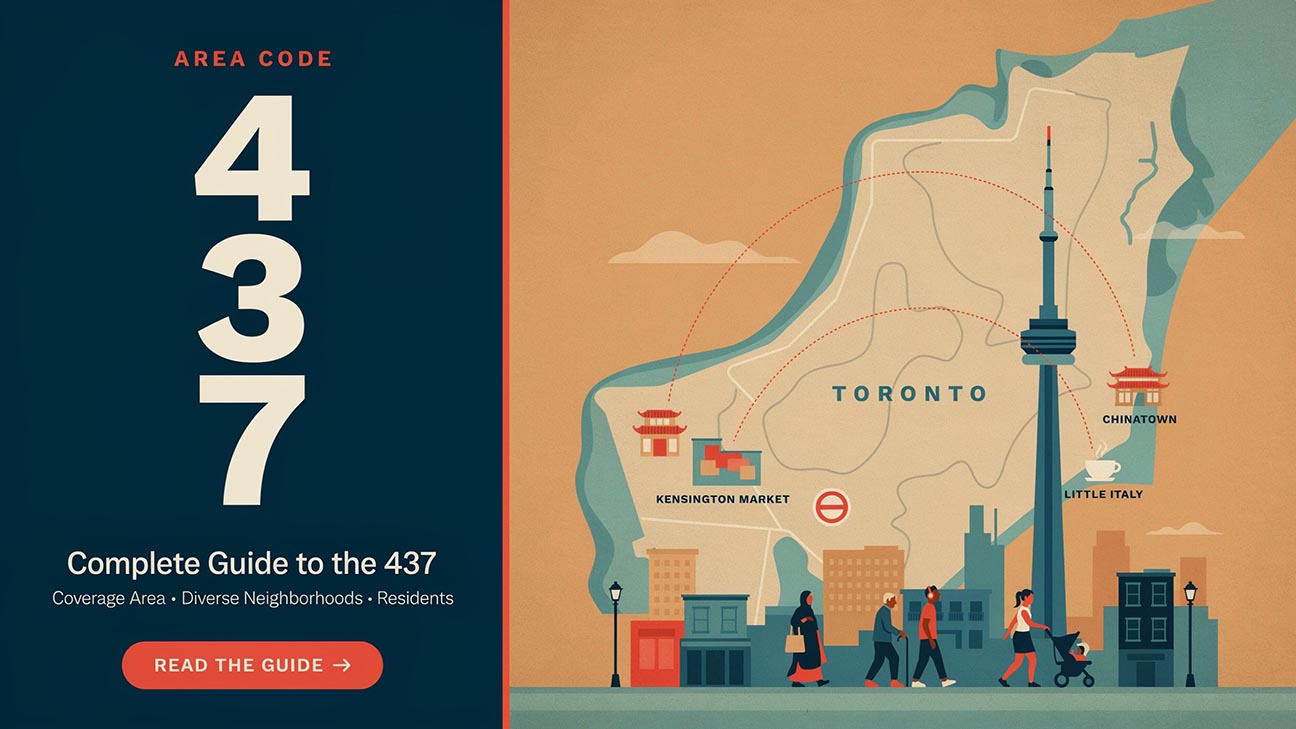
Toronto is home to residents with roots stretching across South Asia, East Asia, the Caribbean, Africa, Europe, the Middle East, and Latin America. Explore neighbourhoods like Kensington Market, Chinatown, Little Italy, Greektown, or the Distillery District and you’ll see diversity reflected in restaurants, festivals, places of worship, and local businesses. It’s genuinely common to hear several languages spoken within a single city block.
An Economic Powerhouse
Toronto anchors much of Canada’s financial sector, hosting major banks and a dense concentration of tech, healthcare, and creative industries. This economic weight is one of the driving forces behind the constant demand for new phone numbers — every new business, every new employee, and every new device needs a line, and that steadily eats into the numbering pool.
A Hub for Newcomers
Toronto welcomes a substantial share of Canada’s new immigrants and international students each year. Many newcomers set up their first Canadian phone line shortly after arriving, which is part of why overlay codes like 437 were needed in the first place — the city’s population and its telecom demands have simply grown faster than a single area code could support.
Who Uses 437 Numbers? A Look at Residents and Businesses
A 437 number can belong to almost anyone connected to Toronto’s phone network:
- Residents who signed up for a new mobile or home phone line after 2013
- Small businesses and startups setting up local lines
- Enterprises and call centers operating out of the GTA
- Remote workers or businesses elsewhere using VoIP services to maintain a local Toronto presence
That last point matters. Because VoIP (Voice over Internet Protocol) numbers aren’t tied to physical infrastructure the same way old landlines were, a business anywhere in the world can obtain a 437 number to look and feel local to Toronto customers. It’s a popular strategy for companies wanting a Canadian footprint without opening a physical office.
How to Dial a 437 Number
Toronto has required 10-digit dialing since the 647 overlay launched in 2001, and that rule still applies:
- Local calls within Toronto: Dial the full 10 digits — area code plus the 7-digit number (437-XXX-XXXX) — even if you’re calling from another 437, 416, 647, or 942 number.
- Long-distance calls within North America: Dial 1, then the area code, then the 7-digit number (1-437-XXX-XXXX).
- International calls into Toronto: Dial your country’s exit code, followed by Canada’s country code (1), then the full 10-digit number.
Is the 437 Area Code Safe? What to Know About Scam Calls
A 437 number is not inherently suspicious — it’s a completely legitimate Canadian area code used by everyday residents, hospitals, delivery services, and local businesses. That said, area codes in general offer no real protection against scams, because caller ID can be spoofed.
Here’s the important distinction: caller ID shows a number, not a verified identity. Scammers can make a call appear to come from a 437 number even if they’re nowhere near Toronto. So while there’s nothing wrong with the area code itself, it’s still smart to apply basic caution:
- Don’t share personal, banking, or identity information with an unexpected caller, regardless of the area code shown.
- If someone claims to represent a bank, government agency, or utility company, hang up and call back using the official number from their website or your last statement.
- Be wary of urgency or pressure tactics — legitimate organisations rarely demand immediate payment or information over the phone.
- Use call-blocking or spam-identification features available on most modern smartphones and carriers.
Treat a 437 number the way you’d treat any other: normal until proven otherwise and never a substitute for real verification.
437 vs. 416 vs. 647 vs. 942: What’s the Difference?
Since all four codes cover the same physical territory, the differences are purely administrative:
| Area Code | Introduced | Status |
|---|---|---|
| 416 | 1947 | Original code, still widely used |
| 647 | 2001 | First overlay |
| 437 | 2013 | Second overlay |
| 942 | 2025 | Third overlay |
None of these codes indicates a “better” or “more central” location than another. A 416 number isn’t more prestigious than a 437 number — it simply means the line was issued before the newer codes were introduced. Functionally, calls, texts, and data all work identically across all four.
Frequently Asked Questions
Is the 437 area code a real area code? Yes. It was officially approved by the CRTC and went into service on March 25, 2013, as an overlay for Toronto, Ontario.
What city does the 437 area code belong to? Toronto, Ontario, Canada, along with parts of the surrounding Greater Toronto Area, including North York, Scarborough, Etobicoke, and neighbouring municipalities.
Is 437 in the same location as 416? Yes. 437 covers the exact same geographic territory as 416 and 647. It’s an overlay, not a separate region.
Do I need to dial 10 digits for a local 437 call? Yes. Toronto has required 10-digit dialling since 2001, so you always need the full area code plus the 7-digit number, even for local calls.
Can a 437 number be used outside of Toronto? Technically, yes, through VoIP services. Businesses and individuals can obtain a 437 number to appear local to Toronto even if they’re physically located elsewhere.
Is a call from a 437 number likely to be a scam? Not inherently. The area code itself is legitimate. Scammers can spoof any area code, so the safest approach is to verify unexpected calls independently rather than judging safety by the area code alone.
Why does Toronto have four area codes for one city? Toronto’s population and mobile/VoIP usage have grown so quickly that its original area code (416) ran out of available numbers. Rather than repeatedly splitting the city into new regions, regulators added overlay codes (647, 437, and most recently 942) to expand the numbering pool without forcing residents to change existing numbers.
Conclusion
The 437 area code is simply Toronto’s third telephone area code, introduced in 2013 to keep pace with the city’s rapid growth in population, mobile devices, and VoIP services. It covers the same territory as 416 and 647 – spanning downtown Toronto, North York, Scarborough, Etobicoke, and nearby GTA communities – and reflects the incredible cultural and economic diversity of one of Canada’s largest cities. Whether you’ve spotted a 437 number on your caller ID or you’re setting one up for your own business, the key takeaways are straightforward: it’s a legitimate Toronto-based code, 10-digit dialling is mandatory, and normal phone-safety habits apply just as they would with any other area code.